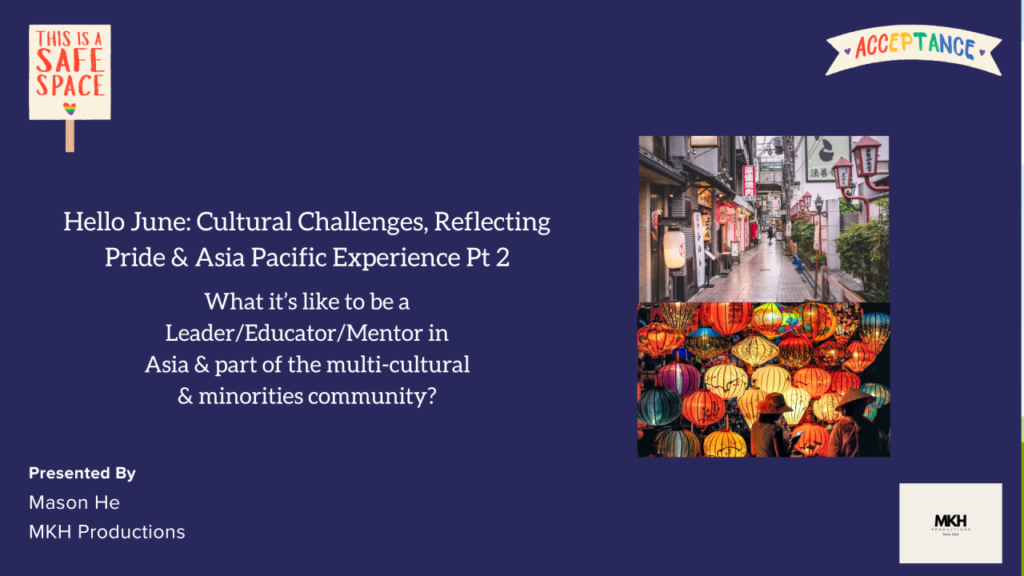
Hello all! It’s been awhile since my last edition of MKH Productions. In the last edition, I shared my experience & tips on why you should study abroad and some things you can take note on preparing.
First I want to take the time to dedicate a celebration to AAPI(Asian Pacific) Heritage Month or now known as Asian American, Native Hawaiian, Pacific Islander Month.
AAPI:

AAPI Heritage Month, observed every May, is a time to recognize and celebrate the contributions, histories, and cultural richness of Asian American, Native Hawaiian, and Pacific Islander communities in the United States. This month is significant because it brings visibility to groups whose stories have often been overlooked, and it provides a space to honor their impact on American history, from labor and politics to the arts and sciences. It also serves as an opportunity to combat harmful stereotypes, raise awareness about ongoing discrimination, especially in light of recent rises in anti-Asian hate and promote understanding and inclusion. The AAPI community is incredibly diverse, representing more than 40 countries and countless cultures, and this month encourages education and celebration of that diversity. May was chosen specifically for two key historical reasons: the arrival of the first Japanese immigrants to the U.S. on May 7, 1843, and the completion of the transcontinental railroad on May 10, 1869, a feat made possible largely through the labor of Chinese workers. Together, these milestones highlight both the struggles and the enduring legacy of AAPI communities in shaping the nation’s past and present.
How is AAPI celebrated in your community? In my hometown, Sacramento, we held a Night Market festival with over 4,000 attendees, more than 50 vendors and cultural performances. As they say, it gives generation the next thing to look forward to by an interviewee. Feel free to watch KCRA 3(Sacramento local news station)’s report here.
In connection to my experience this past few months, I had the pleasure of supporting programs onsite in Taiwan and South Korea with students from various U.S. institutions, including Babson College , Carlson Executive Education, University of Minnesota , Penn State University , Texas State University , and University of Kentucky. It was a busy yet rewarding month, as I handled everything from logistics and schedule planning to cross-cultural coordination. As a U.S. citizen, one of my personal goals was to help students—many of whom had little to no prior exposure to Asia, gain a deeper understanding of the local culture and academic environment.

One of the key challenges I encountered onsite was learning how to be inclusive in a seamless and respectful way. Asia is an incredible place to explore, but it may not always align with everyone’s personal tastes, whether it is culture, food, way of thinking and it proves to be an ongoing challenges for many clients going out for overseas travels for the first time. The more specific the requirements, the more preparation is needed, so I’ve learned that the key is to encourage participants to research their own needs in advance and offer flexible options. I now feel more confident in recommending Asia-based programs and guiding clients on how to navigate cultural differences while still meeting individual needs.
A highlight of the program was receiving compliments on my event and time management skills, especially in ensuring smooth and well-organized company visits or informative sessions. One of my favorite moments was seeing students’ genuine curiosity and their willingness to learn about Korean customs and etiquette. What made the experience even more special were the thoughtful interactions we shared—hearing about their motivations for joining the program and watching them embrace the experience with openness and joy. These experiences will eventually help figure out develop their inter-cultural skills & global perspectives enhancing a bigger economic value in their knowledge.Thank you once again to the wonderful group!
Pride:

1. Uplift AAPI LGBTQ+ Voices
Highlight and amplify the stories of individuals who identify as both AAPI and LGBTQ+. This intersectional identity is often underrepresented even within AAPI or LGBTQ+ spaces, so it’s important to give voice to those navigating both racial and queer identities. Celebrating figures like actor Bowen Yang, activist Helen Zia, or drag performer Kim Chi showcases how culture, identity, and advocacy intersect.
Connection between both Pride and AAPI:
Both AAPI Heritage Month and Pride Month emphasize the importance of visibility, acceptance, and community. Many people within the AAPI LGBTQ+ community face unique challenges—such as cultural taboos, family pressures, and limited representation—so bridging the two months can spark dialogue around belonging, resilience, and self-expression.

Reflecting on a busy and rewarding month supporting U.S. university programs in Taiwan and South Korea, I’m reminded of how global education can serve as a powerful bridge between cultures and identities.
As someone who identifies as both Asian American and LGBTQ+ community, it’s become increasingly clear to me how important it is to create spaces where students, especially those with little exposure to Asia, and they can feel both welcome and represented. From handling logistics and programming to guiding cultural adjustments, my role allowed me to support these students not just academically, but personally.
This intersection of international education, AAPI heritage, and queer identity is where I feel most passionate. Moving forward, I hope to develop mentorship networks, inclusive programs, and financial pathways that empower AAPI LGBTQ+ students to explore the world and feel seen while doing so. My goals are(but not limited to):
- Develop inclusive cross-cultural program guides for AAPI, multi-cultural, and underrepresented minorities.
- Create mentorship networks between past and future global participants to enhance cultural intelligence & understanding
- Establish financial assistance pathways (scholarships, stipends, grants) for underrepresented students in global programs & review student’s personal statements and interests to ensure they achieve the best quality of opportunities
- Working with the organization, partner with AAPI and LGBTQ+ organizations to host community events, panels, and training.
- As a HR mind-like buddy, form & maintain global partnerships for cultural exchange, ideas, and foster collaboration for future educational and professional(internships, job placements) program
These are all for now. Feel free to add in additional thoughts below in the comments section.
Best,
Mason
MKH Productions